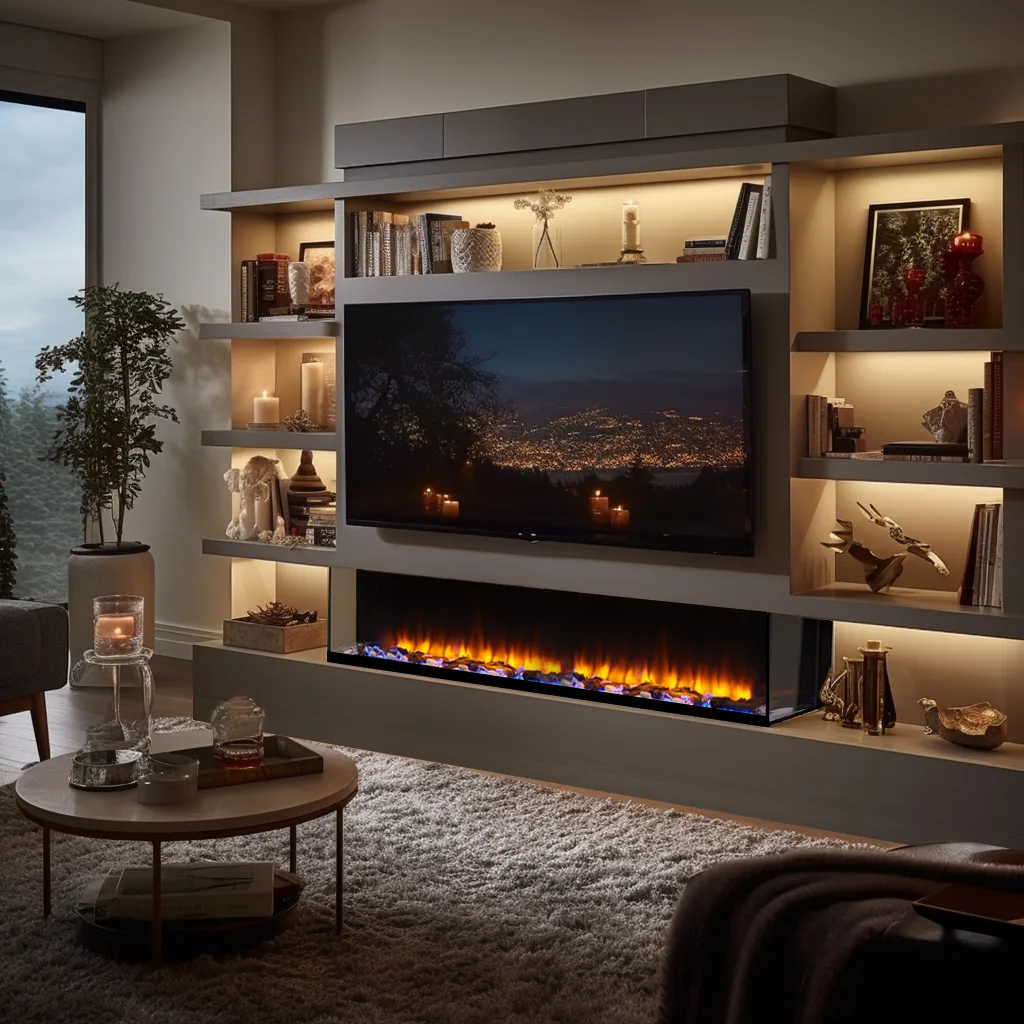
When purchasing a new fireplace, the cost of running it – whether it’s wood, gas, coal or electric – is a major consideration. Running costs mainly cover the cost of the fuel, but can also include your new fireplace’s long term maintenance, servicing and cleaning. Fortunately, electric fireplaces need less ongoing care than other types of fireplaces.
In this article, we’ll go over the cost of running an electric fire – from initial purchase to daily costs – so you can budget well and light up your home with a stylish, cosy product at the same time.
Electric fire energy consumption costs explained
Based on wattage of the fire, local electricity tariffs and frequency of use, the cost of running an electric fire varies from household to household. Some electric fireplaces have control panels allowing users to adjust the temperature and operational duration.
Local electricity rates
Discover your local electricity rates by looking at your electric bill or contacting your utility provider. The kilowatt-hour (kWh) of your area is what you need to make the calculations. In the UK, the average kilowatt-hour cost is around 24p, according to Ofgem (This will raise to around 27p in April 2025).
Frequency of use
This will directly affect the cost of running it. Higher frequency makes it more expensive to run, whereas if it’s only used every now and again, or only for its flame effect lighting, then it will be less expensive.
Manual control
A lot of electric fire with thermostat timers, settings, and remote controls, giving further control over energy usage.
Costs associated with different fire types
Each different type of fire has its own associated cost. Gas fires use gas power, which is charged as part of your utility bills – similar to electrical fires. While coal and wood need you to buy bags of fuel at regular intervals.
Electricity vs gas fire costs
While electric fires are fairly efficient and affordable to run, electricity is more expensive per unit of energy than gas in many regions. Gas is around £0.06 per kilowatt-hour while electricity is around £0.24 per kilowatt-hour, according to Ofgem.
Gas fires, however, need regular servicing, which can cost up to £85 every year. They also require more complex and costly installation. If you don’t have one in place, it can cost around £300 to £700.
Electric fires are cheaper and easier to install, and don’t require much maintenance. If you have the electrics in place, you can even install an electric fire yourself. You don’t need to check gas lines, eliminate leaks, or clean flues and chimneys.
Coal and wood costs
These fire types require you to buy the fuel up front. A bag of smokeless coal can cost around £20. These types of fires also require a lot more servicing and care, such a chimney cleaning, which can cost up to £100 per clean.
Calculating the running cost of an electric fire
A lot of people confuse the cost of an electric fire with that of an electric heater (these heaters really are expensive to run). Electric fireplaces use far less electricity than electric heaters.
Electric heaters can cost as much as three times the price of an electric fireplace to run, sometimes more, depending on the product. Electric fireplaces that provide both a flame effect and heating consume more power with the heating function in operation.
In the UK, the eco design requirements for energy-consuming products for electric fires ranges from 0.5kilo watts (kW) to 2kW (2000w), meaning that the highest output of your electric fire will stand at 2kW. We’ll work out 2kW electric ire running costs.
If you buy an electric fireplace with a 2kW level of power and are charged 24p per electrical unit, you can calculate the cost by multiplying the unit cost by the energy levels.
24×2 = 48p per hour.
If you run the appliance five days a week for four hours, then the weekly cost is £9.60. Assuming 4 weeks in a month would make the monthly cost: £38.40.
Let’s assume that, as we’re in the UK, you might have the fire on from September to April. That would give you an annual cost for a cosy living room during the dark and stormy months of £307.20. If you choose a more low energy 1.2kW electric fire place, that drops to £161.28.
Your situation could be slightly cheaper or more expensive, so it’s worth checking your individual situation to get a more accurate idea. But generally, these products are cost-effective.
How to save energy and cost on your electric fire
When shopping for an electric fireplace, you can reduce your electric fire running costs by keeping an eye out for models with energy saving features such as:
- Adjustable thermostats
- Flame-only settings
- Variable heat settings
- Timer functions
- Eco modes
- LED technology
Our Castleton Inset Electric Fire is a good example of the latter – as these will help you to save energy and ultimately, cost. This fire also adjusts its electric usage based on room heat, so you won’t use electricity heating an already warm room. It can drop its output down to 1kW.
You can also ensure you have good fireplace insulation. This ensures that the heat produced from the fireplace goes into the living space and isn’t wasted. This minimises heat loss, making the fireplace more efficient.
Zone heating is another benefit. Electric fireplaces excel at heating specific areas of your home such as living rooms, which means you can have the central heating on less and save money.
Running cost of flame effect lighting
Sometimes, you don’t need the heat on but want the movement and look of the flame effects. This is a really cost-effective way to use electric fires and great for warmer months. Many of our models use LED technology to provide a highly realistic fire effects to reduce electricity costs. Here’s how to work out your costs:
1. Determine power consumption
Flame effects vary in power consumption (for accurate details, check the product in question), but it’s usually around just 15 watts (not kilo watts) when it is operating.
2. Calculate daily energy consumption
If you used the flame effect for four hours per day, you would divide the daily kWh (kilowatt hours) by the energy consumption. Converting watts (W) to kilowatts (kW) requires dividing by 1000, as there 1,000 watts (W) in a kilowatt (kW).
15 watts x 4hours = 60 watts a day. That’s just 0.06 kWh/ day.
3. Calculate monthly energy consumption
Multiply the daily consumption by the number of days you use the light in a month. Working on our five days a week average, that’s 20 days a month:
Monthly kWh = Daily kWh x 20 = 1.2kW/ month
4. Determine monthly and yearly cost
Now, multiply the monthly energy consumption by the cost per kWh in your area to find the monthly cost. We’ve established a kW/hour cost of 24p.
Monthly cost = 1.2 x 0.24 = £0.28.
This means you’d spend just £2.88 a year running the flame effect fire without the heater. With the heater and flame effect together, the yearly cost of running your electric fire is £164.16.
Explore energy-efficient fireplace solutions today!
Cost is an important factor when buying a new fireplace, but not the only factor. Consider your personal preferences, environmental factors, and maintenance as well. Ultimately, buying an electric fireplace that suits your budget, keeps you warm and provides an aesthetic glow to the room is a great addition to any household.
All Endeavour Fires products come with a 12-month warranty and Free Delivery to parts of the UK. Contact us to find a cosy, stylish solution for your unique living space today.